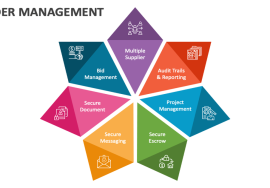
The role of contract documents in contractual agreement between two parties
Understanding contract is crucial for individuals entering into legal agreements in various contexts such as business transactions, employment relationships, real estate deals and more.
Seeking professional legal advice when drafting or entering into complex contractual arrangements is highly recommended to ensure clarity, protection of rights and compliance with applicable laws. Contracts are legally binding agreements between two or more parties. They outline the rights, obligations and responsibilities of each party involved.
When negotiating a contract, it is important to understand that there is a set of documents that are exchanged between the two parties (and multiple participants in each party!), it is not just the contract. The complete set, including the contract itself, makes up the “contract documents.” Collectively, the contract documents ensure the agreement is comprehensive, clear, and legally binding.
Contract documents comprise a set of written materials that collectively form a legal agreement between two parties. While the contract itself is a crucial component, it is just one part of a larger ensemble of documents, each playing a vital role in defining and clarifying the terms of the agreement. The five components of the contract documents are offer, acceptance, awareness, consideration, capacity and legality.
Examples of contract documents
How substantial is that set of documents moving between counterparties?
Well, it depends. The number and complexity of contract documents depend on the specifics of the agreement (and often on the industry!). One approach to understanding these documents is to categorize them based on their role or purpose in the context of the agreement. That breakdown might look a little like this:
- Core Legal Contracts
Essential for forming any contractual relationship, these documents establish the legal framework and terms of the agreement. They protect the interests of all parties and provide the legal structure for the engagement.
Example Documents:
- Main Executable Contract and Exhibits: The primary document outlining the agreement’s terms.
- Amendments or Addendums: Modifications or updates to the original contract.
- Memorandums of Understanding (MOUs) and Letters of Intent (LOIs): Preliminary agreements indicating the intent to enter into a contract.
- Technical Specifications and Details
These documents ensure that all technical aspects of the contract are well-defined, serving as a blueprint for quality assurance and project success.
Example Documents:
- Technical Specifications Document: Detailed descriptions of technical requirements.
- Engineering Drawings and Product Blueprints: Visual representations of the project or product.
- Work Schedules and Quality Assurance Protocols: Outline project timelines and quality standards.
- Financial and Payment Documentation
Vital for outlining financial obligations and ensuring clear, timely payments, these documents help avoid financial disputes and provide clarity in monetary transactions.
Example Documents:
- Purchase Orders: Formal requests for goods or services.
- Cost Breakdown Sheets: Detailed financial breakdown of expenses.
- Payment Schedules: Timeline for payments.
- W-9 Forms (EIN): Used for tax identification and reporting.
- Compliance and Regulatory Documents
These documents ensure adherence to legal, regulatory, and industry standards, critical for maintaining the contract’s legal integrity and avoiding penalties.
Example Documents:
- Certificate of Incorporation: Officially recognizes the formation of a corporation.
- Compliance Certifications and Environmental Impact Assessments: Demonstrate adherence to specific laws and regulations.
- Business Licenses and Permits: Legal permissions for certain types of work.
- Risk Management and Insurance
Focused on minimizing potential risks and liabilities, these documents provide a safety net for unforeseen events and financial losses.
Example Documents:
- Insurance Policies: Protect against specific risks, often proven by furnishing a certificate of insurance.
- Risk Assessment Reports: Evaluate potential risks.
- Indemnity Agreements and Performance Bonds: Provide financial protection and guarantees, e.g., surety bonds.
- Project Management and Operational Guides
Key for guiding the execution of the contract, these documents provide structure and ensure consistency in operations, aligning with the contract’s goals.
Example Documents:
- Project Management Plans and Operational Manuals: Outline the strategy and procedures for project execution.
- Progress Reports and Standard Operating Procedures (SOPs): Regular updates on project status and detailed procedures.
- Project Timelines and Milestones/Statements of Work (SOW): Define project timelines and specific work to be done.
- Confidentiality and Data Protection
Ensuring the security of sensitive information, these documents are foundational in maintaining privacy and data integrity in business relationships.
Example Documents:
- Non-Disclosure Agreements (NDAs) and Data Protection Agreements: Protect confidential information.
- Privacy Policies and Security Protocols: Outline how personal data is managed and protected.
- SOC2 Type 2 Reports, ISO 27001 Certificates: Demonstrate adherence to data security standards.
- Stakeholder Communication and Engagement
Crucial for managing relationships and effective communication, these documents help maintain positive and clear interactions with all parties involved.
Example Documents:
- Communication Plans: Strategies for effective communication.
- Stakeholder Engagement Strategies: Plans for involving and managing stakeholders.
- Industry-Specific Documents
Addressing unique requirements of specific sectors, these documents ensure the contract’s relevance and adherence to industry practices.
Example Documents:
- Construction: Site safety plans and environmental impact studies.
- Healthcare: HIPAA compliance documents for patient privacy such as the Business Associate Agreement.
- Technology: Software licensing agreements and intellectual property rights documents.
- Finance: Investment disclosures and regulatory filings.
- Entertainment: Licensing agreements and talent contracts.
Benefits and Challenges of Contract Documents
Contract documents offer many benefits, such as providing explicit terms, documented records, legal safeguard, and enhanced communication between parties. However, they can also present certain challenges, such as the possibility of misunderstanding, expenditure, and laborious document organization.
Despite these challenges, the benefits of utilizing contract documents far outweigh the drawbacks. Here are some of the key benefits:
-Ensuring clarity and detail in the terms and conditions of the contract
-Fostering collaboration and communication between the parties involved
-Instituting document management and storage for easy access and reference
By implementing these practices, all parties involved in a contract can work together more effectively and efficiently