Achieving strategic implementation success
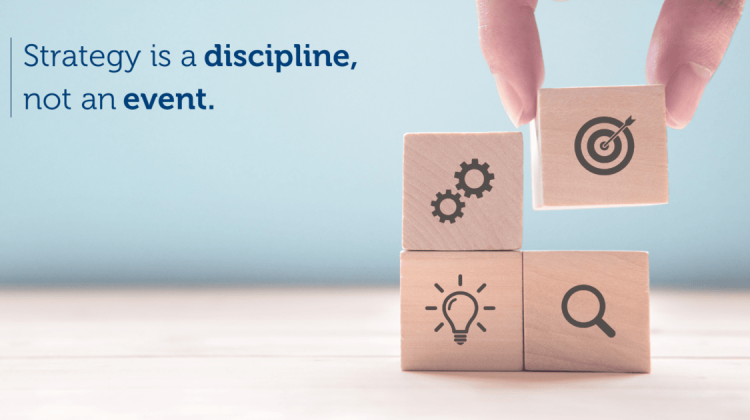
According to a study by Harvard Business Review, companies with a well-defined strategy achieve a 5.2% higher annual revenue growth rate than those without one. A healthy strategy helps organizations stay focused, make informed decisions, and achieve their business objectives at scale and speed. Especially as we witness the disruption at the center of today’s business climate accelerating market conditions, technology advancements, and leadership transitions, the vitality of an enterprise has become reliant on the success of its strategy. To exceed the demands of the future marketplace, companies need to produce agile strategies that focus on progressive transformation to maximize performance and sustainability.
However, before spending precious time and resources developing a winning strategic plan, leaders must ask themselves, “Is my enterprise equipped to handle the execution of a transformational strategy?” After all, 90% of organizations fail to execute their strategies successfully. Assessing an organization’s readiness prior to planning is a crucial step to ensuring a well-developed strategy will perform favorably. By collecting data to evaluate readiness at the enterprise, team, and individual levels, companies will gain the insights necessary to accelerate the execution of their strategy. To ensure organization success, we have to put together data-backed and time-tested guidance for each of the below areas to help you understand why they are critical to assess before developing your strategic plan and how to get them up to speed if necessary with excellence.
Current Enterprise Strategy
For a strategy to have continued success, it’s important to create a cadence of review and renewal, studying its effectiveness and seeking to understand its strengths and gaps. Once you assess what is and isn’t working, you can pinpoint obstacles that might be preventing you from filling those gaps and begin to work through them.
You can’t create a winning strategy without a robust process behind it. According to a study done by Harvard Business Review, companies with a strong strategic planning process are more likely to experience high-quality innovation. Assessing how strategy is currently planned, communicated, and executed across the organization can enhance strengths and highlight areas of opportunity. Keep the process future-focused by staying up-to-date with industry standards and looking to prevailing market trends for what will come next. For example, does your strategy currently address industry-leading ESG (environment, social, and governance) standards? Does it elevate the employee experience and engagement to drive increased recruitment, retention, and business performance? If not, what will it take to get those communicated, resourced, and executed?
Leadership Team Strategic Effectiveness
The effectiveness of your leadership team to communicate and execute strategy is essential for the enterprise to achieve long-range competitive advantage and drive growth. The ways in which your team collects insights, communicates the vision, resources initiatives, and maintains a cadence of touch points are all critical to the success of the strategy. A leadership team can increase their readiness to initiate and reinforce the planning and execution of real-time and long-range strategy through the following actions:
- Communicate a vision that inspires growth and focus. Once a well-defined vision is created, the statement should be communicated in simple and easy-to-understand language that resonates with and inspires all stakeholders, from employees to investors. To ensure focus, the vision should be connected to the day-to-day responsibilities of each employee to help them understand how their work contributes to the broader vision and goals of the organization.
- Collect insights from inside the organization to inform the strategy. Surveys and focus groups can be a great way to gather feedback from employees on a range of topics related to the organization’s strategy. Additionally, establishing open communication channels between leadership and employees, such as regular town hall meetings, can help leadership stay in tune with what employees are thinking and feeling to gather insights that will inform the strategy.
- Resource long-range strategies and real-time business needs. Prioritizing investments based on strategic objectives can help ensure that resources are allocated to initiatives that align with long-range business strategies. To ensure real-time needs are concurrently addressed, contingency plans should be built with strategies for mitigating risks and maintaining business continuity.
- Maintain a cadence that prioritizes long-range strategy. Setting a cadence of regular strategic reviews can help keep the leadership team focused on long-range strategy. These reviews should include an assessment of progress towards long-range goals with defined metrics, a discussion of any changes in the business environment, and any requests for support.
Organizations that invest in developing their leadership team’s strategic readiness and execution dynamics are more likely to achieve their goals and drive profitability at scale.
Growth and Innovation
Leadership teams that strategically identify and invest in innovation and growth opportunities allow for significant performance gains and employee engagement throughout their organization, not to mention a greater chance at maintaining relevance within the market. When companies prioritize innovation, they are more likely to experience revenue growth, higher profit margins, and long-term success. At Transcend we believe that today’s fast-paced business environment requires even more intentionality in the investment of expanding capabilities and capacities.