Importance of budget forecast in budgeting
One crucial aspect of financial planning is budget forecasting, which involves using data analysis to predict future financial outcomes and create a plan to allocate resources accordingly. By looking at past trends and your current financial situation, you can get a good idea of what’s coming down the road and plan accordingly.
Having a budget forecast is like having a secret weapon in your pocket. It is an absolute game-changer when it comes to financial management. By predicting your future financial outcomes and creating a plan to allocate your resources, you can avoid nasty surprises and make smart financial decisions.
Budget forecasting is a financial planning process that involves estimating future income and expenses based on historical data and other relevant factors. It helps individuals and businesses create a financial plan and allocate resources effectively by predicting future cash flows, profits, and losses. Essentially, budget forecasting is a way to anticipate and plan for financial success, whether you’re trying to save for a big purchase or manage a business’s finances.
A budget is like a plan you make to keep your spending in check. It’s basically a list of how much money you expect to make and spend over a certain period, like a month or a year. You use a budget to make sure you’re not overspending and to keep track of your finances.
A budget forecast, on the other hand, is like a sneak peek into your financial future. It’s an estimate of how much money you might make or spend beyond the budget period. So if your budget covers the next month, a budget forecast might predict what your finances will look like for the next six months or a year. You use a budget forecast to plan for big expenses, like a vacation or a home renovation, or to prepare for unexpected costs.
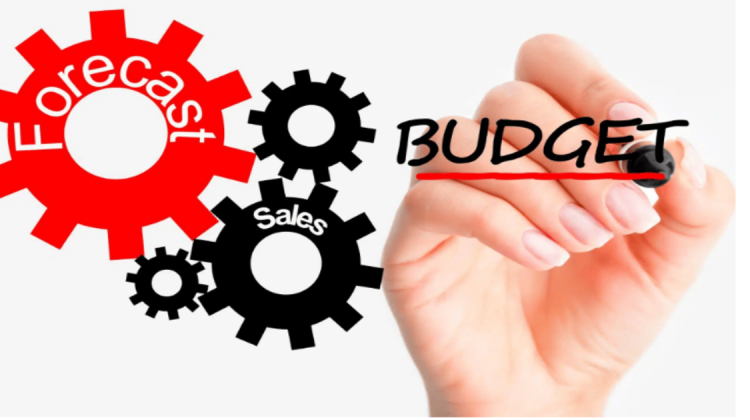
Using forecasting and budgeting together helps businesses align goals across an organization and plan for future business development. It provides a basis for strategic business and financial decisions that are realistic. A forecast budget is the responsibility of managerial staff who work with teams to monitor existing revenue and expenses and forecast the performance of budgeted values.
Benefits of a forecast budget
A forecast budget highlights a company’s future opportunities and threats and sets realistic business goals based on current actual data and current industry averages. The benefits of a forecast budget compared to a static budget include:
Current analysis
A static budget reviews historical data to set business goals. In contrast, a forecast budget is forward-looking and based on current performance analysis. A forecast budget helps a business effectively predict and manage cash flow and future expenses.
Adjustable time frame
A company sets a static budget for each period. It conducts a variance analysis at the end of the period to generate a budget deviance report. Companies can adjust a forecast budget more often to modify business activities to meet the forecast budget requirements. As a business uses an adjustable time frame for forecast budgets, it doesn’t conduct variance analysis.
Actual results
Combining actual performance results with forecasts is a more reliable metric for business decision-making, as it brings attention to changes in the current business circumstances. Forecasting provides current data for calculated planning and highlights future business threats, like a decrease in sales after a holiday season. This tool helps managers develop strategies to counteract business performance threats ahead of time compared to a static budget which outlines what a business hopes to achieve.
Creating a Budget Forecast
– Gather historical financial data
Collect financial records and data from previous years to identify trends and patterns. You can review your bank and credit card statements for the past several months, tracking all income and expenses. This will help you identify trends and patterns in your spending habits. You can also review past tax returns, pay stubs, and any other financial documents to get a more comprehensive understanding of your income and expenses. Additionally, you can use budgeting apps or software that automatically tracks and categorize your expenses to make the process easier.
– Identify and analyze relevant factors
Consider external factors that could impact your financial forecast, such as market trends, economic conditions, or industry developments. Use this information to adjust your forecast as needed. For example, if you own a business or invest in the stock market, you may need to consider factors such as interest rates, inflation, and changes in consumer demand when forecasting your income and expenses. Additionally, changes in the job market or economic conditions can affect your employment or investment income. Natural disasters or other unexpected events can also impact your expenses or income. To account for these external factors, it is important to regularly monitor news and economic reports, as well as any industry-specific information that may be relevant to your situation. This information can help you make informed decisions about your finances and adjust your budget forecast accordingly to reflect any potential changes or uncertainties.
– Determine your revenue sources
Estimate your income based on expected sales, client payments, or other sources of revenue. To do this, you can review your sales history, analyze market trends, assess your current business activities to determine their contribution to your revenue, and consider new revenue streams. These could be sources of income like primary job, secondary job, investments, rentals, retirement income, government benefits, and other sources. Estimate how much income you expect to earn from each source realistically and conservatively to avoid overestimation.
– Estimate your expenses
Identify all of your expected expenses, including fixed and variable costs, such as rent, salaries, supplies, and utilities. To estimate your expenses, review your historical expenses, categorize them, and consider external factors like inflation and changes in the market, etc. Categories may include housing expenses, transportation expenses, food expenses, debt payments, and personal expenses. Use your past spending patterns and adjust for changes in your circumstances, such as a new job or upcoming expenses. It’s important to be realistic and conservative in estimating expenses to avoid overspending and ensure that your budget is feasible.
-Calculate your net cash flow
Subtract your total expenses from your total revenue to determine your net cash flow. This will give you an estimate of the amount of money you have left over at the end of the period. If your net cash flow is negative, you will need to adjust your expenses or increase your income to achieve a balanced budget. Calculating your net cash flow helps you to understand your financial situation and make informed decisions about spending and saving.
– Review and adjust your forecast
Once you have created your forecast, review it regularly to identify any changes or adjustments that need to be made. Consider updating your forecast based on actual results to improve accuracy over time. To review and adjust your forecast for a budget, compare actual spending and income with forecasted amounts, identify areas of over or underestimation, and adjust future forecasts accordingly. Look for areas where expenses can be reduced or income can be increased to create a balanced budget. Regularly reviewing and adjusting your budget forecast is important to ensure you stay on track with your financial goals and have a clear understanding of your financial situation.